An Executive Journal from Outfront Solutions
Issue 1: Where Meaning Begins
Why This Journal Exists
Every organization is trying to become more visible. The organizations that endure become something more. They become understood. They become remembered. Eventually, they become meaningful. And then they are chosen again and again.
That journey has fascinated us for decades.
The Architecture of Meaning explores how meaning is built: the work behind the words, the decisions that shape them, the philosophies that guide them, the people who bring them to life, the stories that illustrate their importance, and the experiences that validate promises. Together, they determine whether organizations earn a lasting place in the lives of the people they serve.
Some organizations earn that place. Others never do. We’re interested in understanding why.
Jeanine Moss & Nicole DeMeo
The Question
What Is the Work Behind the Words?
Many organizations believe branding begins with messaging. We’ve come to believe messaging is one of the last decisions an organization should make.
Organizations don’t earn meaning through messaging. They earn meaning through decisions.
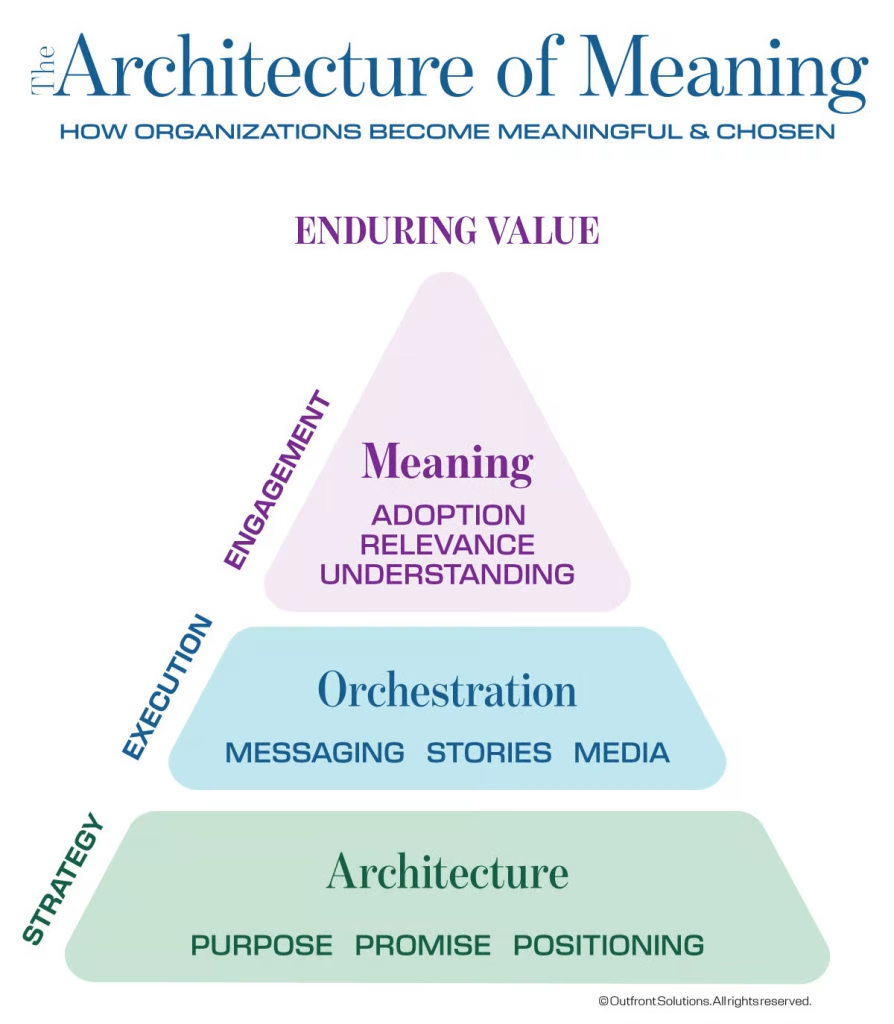
Messaging reveals decisions. Decisions reflect strategy. They define the promises an organization is willing to make, the customers it chooses to serve, and the role it wants to play in their lives. Positioning lays the foundation for meaning by aligning those decisions with the realities of the market and the needs of the people it hopes to serve.
Only then do words matter.
When messaging comes first, organizations may sound compelling without ever becoming meaningful. When meaning comes first, messaging becomes something entirely different. It isn’t an exercise in persuasion. It’s an expression of organizational truth.
This issue explores the work behind the words.
Building Meaning
Your Purpose Comes First
Before an organization decides what to say, it has to decide what it is willing to promise. That promise begins with purpose.
Why did the organization come into existence? What problem was it created to solve? Why did that purpose matter enough for people to dedicate years of their lives to pursuing it?
Purpose gives an organization direction. What that purpose means to customers becomes its promise.
Some promises are obvious. McDonald’s promises consistency. Whether you’re in Chicago, Tokyo, or Sydney, customers expect the same familiar experience. Chanel promises timeless elegance. Customers aren’t simply buying fashion; they’re investing in an enduring expression of style. JPMorgan Chase promises confidence. Its customers entrust the organization with their businesses, investments, and financial futures because they believe it will safeguard what matters most.
Every organization has many promises it could make. The challenge is deciding which ones it should make.
The strongest promises aren’t necessarily the boldest. They’re the ones an organization can deliver repeatedly, profitably, and operationally. They matter to customers, align with the organization’s capabilities, and can be fulfilled consistently over time.
That matters because promises compound. Organizations become known for the promises they keep, and equally for the ones they don’t. A promise is never just a marketing statement. It becomes part of an organization’s identity, shaping how it is experienced, remembered, and ultimately understood in practice.
Your purpose and promises are part of your foundation. Once determined, they become positioning, which reflects your strategy. That’s where we’ll go in our next issue.
Why the Work Behind the Words Matters
Your words are the visible expression of a much larger system. Before an organization communicates with clarity, its leaders must decide why it exists, what it can credibly promise, and what position it wants to earn. Those choices create the architecture.
Orchestration turns that architecture outward. Messaging gives the strategy language. Stories make it human and memorable. Media carries it to the people who need to see, understand, and believe it. When each element reinforces the others, communication stops functioning as a collection of activities and starts operating as a coherent system.
That is what The Architecture of Meaning means for you. It gives you a way to connect leadership decisions with what people ultimately understand, value, and choose. Sound architecture, consistently orchestrated, builds reputation, creates momentum, earns meaning, strengthens loyalty, and contributes to enterprise value.
Without a sound architecture, the communications system cannot hold together. Messaging fragments, stories compete, and media amplifies the inconsistency. Strong words cannot compensate for weak decisions. The strength of the communications system depends on the work behind the words.
In Practice
Listening for the Promise
Early in my career, I published the first newsletter for female business travelers, Women’s Travel Connections. It launched with tremendous momentum. A national press release generated extensive media coverage, and within the first year we had 2,000 paid subscribers.
Then renewal notices went out. Most of them didn’t renew.
After I got over the disappointment, I started making phone calls. Not to persuade people to stay, but to understand why they were leaving. Every conversation led to the same insight.
People loved the newsletter. The problem wasn’t the quality. It was the promise they thought they were buying. Each issue focused on one city. If they weren’t traveling there that month, the newsletter had little value to them. I had fulfilled the promise I thought I was making, but not the promise my readers expected.
That changed everything. We redesigned the editorial strategy. Every issue still explored one city in depth, but we also included several additional destinations, restaurant recommendations, conversation starters for local sports teams, and practical travel advice readers could use no matter where they were headed. Renewals climbed dramatically.
The lesson has stayed with me ever since. Organizations don’t get to decide what promises they make. Customers do. The work is discovering whether those two perspectives align.
(July Offer) Strategy Activation Workshop
Meaning isn’t created by words alone. It’s earned through the work behind them.
That work means making decisions about what you want to be known for, what you can realistically promise, how the operating environment impacts these decisions, and aligning your team around a shared understanding of who you are and why you exist.
The Strategy Activation Workshop does exactly that. It turns ambition into an organizational strategy your team understands, adopts, and executes.
How We Define Meaning
Meaning is earned, not declared. Organizations define what they stand for; audiences decide what it means, whether it matters, and the place it earns in their lives.
Closing Thought
Organizations aren’t remembered for what they say. They’re remembered for what they mean.

Be understood, meaningful, and chosen.
Editor & Author: Jeanine Moss